

The trucking industry has a driver problem. But it’s not the one most people think it is.
The American Trucking Associations reports the industry is short tens of thousands of drivers today, and will need to bring on more than one million new drivers over the next decade to replace retiring workers and meet growing freight demand. Numbers like that make it easy to frame this as a supply problem.
It isn’t.
If supply were the whole story, every carrier would struggle equally. They don’t. Some companies consistently maintain lower attrition rates, more active driver pipelines, and more predictable operations. The difference comes down to one thing: their driver recruitment strategy.
The Real Issue Is Strategy, Not Supply
Industry data shows that 35% of drivers leave within the first 90 days of hire. More than 50% leave within six months. Those numbers don’t reflect a shortage of drivers in the market. They reflect a breakdown in how drivers are being sourced, screened, and set up for the job.
Most recruitment processes in trucking today share the same core problems:
They move too slowly. They treat candidates as interchangeable. They set unclear expectations from the start. They focus on filling a seat today rather than keeping a driver for the year.
Drivers today are informed. They compare opportunities. They read reviews. They talk to other drivers. If your process feels disorganized, slow, or transactional, they move on. And in a competitive market, they don’t have to wait long for the next offer.
Speed-to-Hire Is a Direct Result of a Stronger Recruitment Strategy
Here is a reality that many carriers underestimate: drivers often accept the first solid offer they get, not necessarily the best one on paper.
That means response time matters more than most hiring managers realize. A 48-hour delay in follow-up costs you candidates. A long application process causes drop-off before you even get to a conversation. Poor communication between contact points causes candidates to disengage entirely.
Companies improving their time-to-hire aren’t seeing wins only in volume. They’re seeing better driver quality and longer retention. Speed with precision, not just speed for the sake of speed, is what creates results. This is one reason why platform proficiency in tools like Tenstreet plays a direct role in hiring outcomes.
Why Spending More on Recruiting Doesn’t Fix the Problem
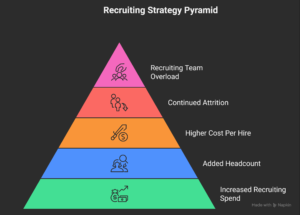
When turnover spikes, most carriers respond by increasing recruiting spend or adding internal headcount. It’s an understandable reaction. But without fixing the driver recruitment strategy underneath, it leads to higher cost per hire, continued attrition, and a recruiting team that’s always playing catch-up.
The cost of replacing a single driver falls between $8,000 and $20,000 when you factor in advertising, recruiter time, onboarding, and lost productivity. Multiply that across 20 or 30 drivers per year and the financial impact becomes significant fast.
Spending more to hire drivers who leave in 60 days isn’t a recruitment program. It’s an expensive cycle with no exit.
What High-Performing Carriers Do Differently
The carriers outperforming their peers aren’t necessarily spending more. They’re operating more strategically. Across the fleets we work with at StaffWorthy, the ones with the strongest retention share a few consistent behaviors:
They listen to driver feedback and act on it quickly. They treat recruitment as an ongoing process, not a reactive one. They align hiring criteria tightly with actual job requirements. They invest in the candidate experience before an offer is ever made.
These aren’t complicated changes. But they require deliberate attention to the full recruitment process, not just the front end of it.
Retention Starts During Recruitment, Not After Onboarding
This is one of the most common misconceptions we see. Companies assume retention is an HR problem that starts on day one of employment. In practice, it starts the moment a driver first interacts with your brand.
Drivers leave early when the job doesn’t match what they were told during hiring. They leave when communication goes quiet after they sign. They leave when onboarding feels chaotic or unclear. Research consistently shows that how drivers experience your hiring process directly shapes how long they stay. [Internal link: driver feedback blog post]
Carriers that reduce early attrition do three things consistently:
They are transparent about the role, the pay, the routes, and the expectations during the recruitment conversation itself. They maintain consistent communication from application through the first week on the job. They match drivers to roles based on fit, not just availability.
That last point matters more than most people give it credit for. A driver placed in a role that doesn’t match their lifestyle, experience, or expectations is a driver who will leave. It’s not a question of if. It’s a question of when.
How the Right RPO Partner Strengthens Your Driver Recruitment Strategy
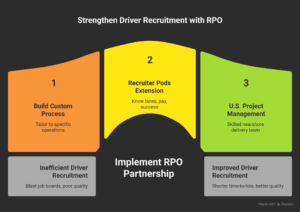
This is where a Recruitment Process Outsourcing model creates real value for trucking companies. A strong RPO partner doesn’t blast job boards and send you a pile of applications. They build a process around your specific operation, your routes, your culture, and your driver profile.
At StaffWorthy, our recruiter pods function as an extension of your team. They know your lanes, your pay structure, and what makes a driver succeed in your environment. That context changes the quality of every conversation they have with a candidate.
The result is a shorter time-to-hire, better placement quality, and drivers who are set up to stay because they were matched to the right role from the start. Our team combines U.S.-based project management with a skilled nearshore delivery team in Guyana, giving your company the coverage and responsiveness to compete in today’s market without the overhead of a full internal recruiting department.
You don’t need to build a bigger recruiting team. You need a better recruitment strategy.
The Bottom Line
The driver shortage is real. But the companies winning in this market aren’t waiting for the supply problem to solve itself. They’re fixing their driver recruitment strategy. They’re moving faster. They’re matching smarter. They’re communicating better. And they’re treating driver fit as a business outcome, not an afterthought.
If your team is dealing with high early turnover, a stalled pipeline, or rising cost per hire, the problem is solvable. But it starts with looking honestly at how your recruitment process is actually working, not how you wish it were working.
Let’s talk about how StaffWorthy can support your hiring goals. Visit staffworthy.com to start the conversation.
About StaffWorthy
StaffWorthy is a U.S.-focused RPO and recruitment solutions provider specializing in sourcing, screening, and placing qualified Class A CDL drivers across the country. Our global team of expert recruiters delivers scalable, cost-effective hiring solutions that help fleets of all sizes reduce overhead and fill seats faster with the right talent.
With a performance-based, pay-per-hire model, we streamline driver recruitment so your internal team can focus on what matters most: keeping trucks on the road and your business moving forward.
Recruit smarter, not harder. With StaffWorthy.